





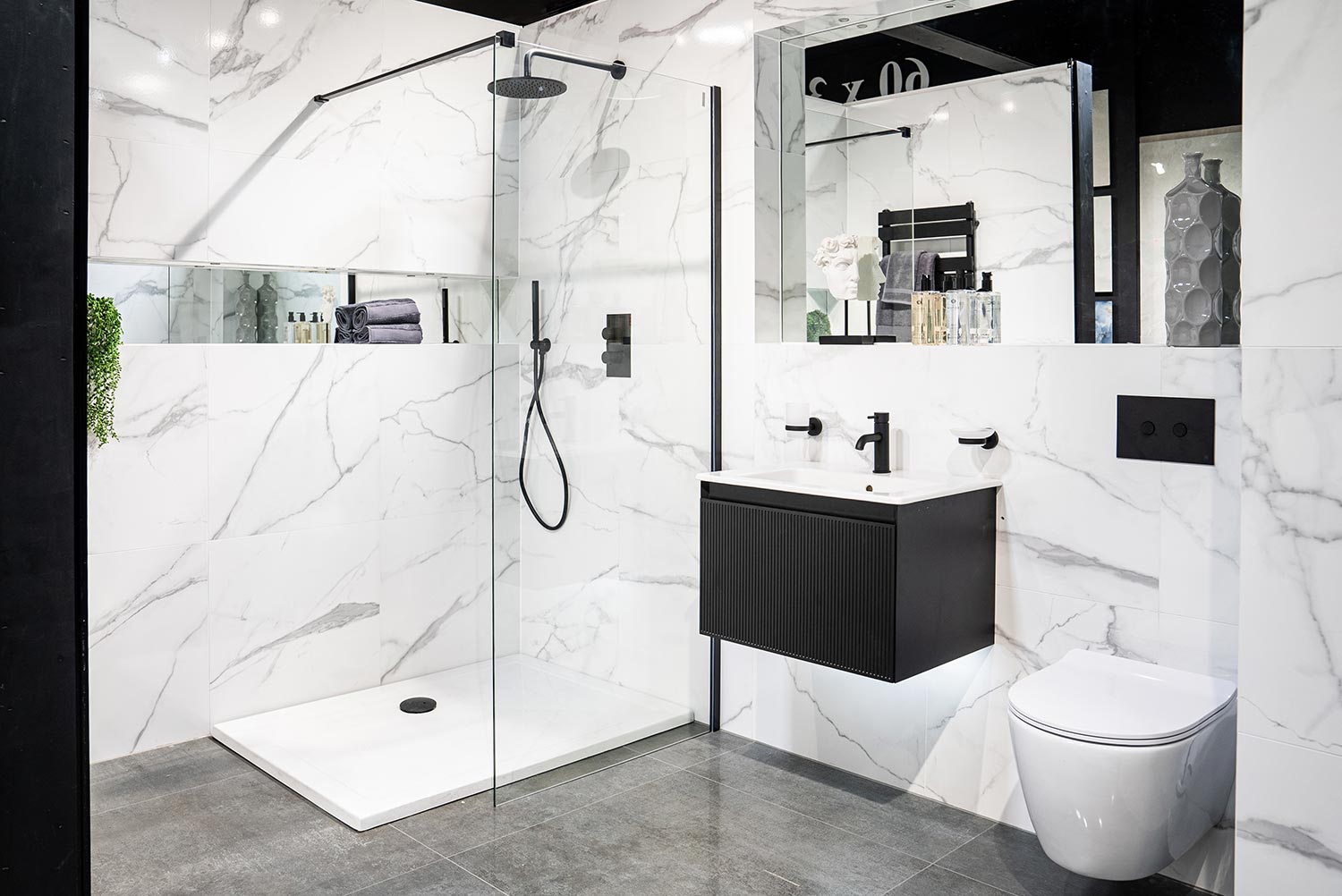
A bathroom renovation is one of the most rewarding home improvement projects. It enhances the value of your home, adds to the comfort and convenience of your life, and allows you to customise any corner as per your choice. But, while some people take weeks to pick the right fixtures and colour schemes for their bathrooms, choosing the right tiles can make a significant difference to the long-term performance of your bathroom.
If you’ve been researching porcelain vs ceramic tiles, you’re not alone. It’s one of the most common questions homeowners ask when planning a bathroom renovation. Although both choices are desirable and popular, there are some key differences which may affect durability, maintenance, water resistance, and value.
It is important to know what makes them different and which one is better for your home renovation before deciding.
Quick Answer: Porcelain or Ceramic for Bathrooms?
Porcelain is the best material for most bathroom tiles renovations. Porcelain tiles are denser, less porous, and more moisture-resistant than ceramic tiles. This makes them ideal for use in the bathroom, shower walls, wet rooms, and anywhere else that comes into contact with water regularly.
Ceramic tiles can still work well in certain bathroom applications, especially on walls and decorative features. However, porcelain is often the better option when durability and long-term performance are priorities.
What Is the Difference Between Porcelain and Ceramic Tiles?
On the surface, they look similar, but the way porcelain and ceramic are manufactured is different.
- Porcelain tiles are made at extremely high temperatures, using refined clay. This process results in dense, hard-wearing tile with a very low rate of water absorption.
- Ceramic tiles are also made from clay, but they are fired at lower temperatures. They are slightly less dense and less water-resistant than porcelain tiles due to this.
This difference is not noticeable while visiting the showroom. But it becomes really important when the tiles are installed in a bathroom setting.
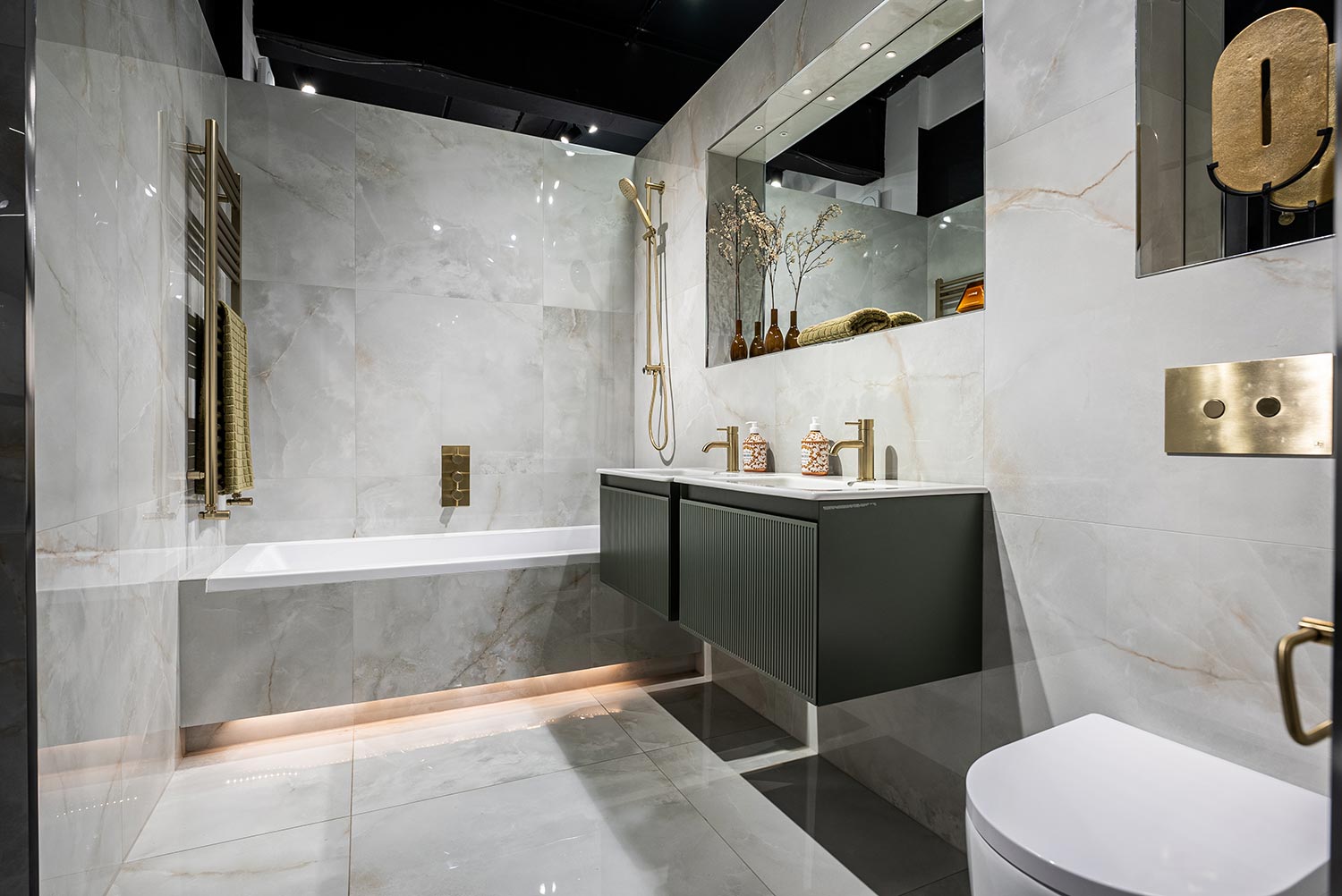
Why Moisture Resistance Matters More Than You Think
Bathrooms face constant exposure to humidity, steam, splashes, and standing water. Over time, these conditions can affect building materials that are not designed to handle moisture effectively.
One of the main reasons many people prefer porcelain tiles is their impressive water resistance. Their dense structure helps prevent moisture from penetrating the tile, making them particularly suitable for wet environments.
This is especially important in:
- Shower enclosures
- Wet rooms
- Bathroom floors
- Areas around baths and basins
Tile specialists often recommend porcelain for these applications because it provides reliable performance even in bathrooms that see heavy daily use.
Ceramic tiles can still be used successfully in many bathroom designs, but porcelain offers greater peace of mind where moisture exposure is a concern.
Durability for Everyday Family Life
While a bathroom may not have as much foot traffic as a hallway or kitchen, it still needs to endure years of daily use.
Frequent cleaning, daily foot traffic, dropped toiletries, and constant exposure to moisture all contribute to the wear and tear bathroom surfaces experience over time.
Porcelain tiles are also more durable than ceramic tiles, as they have a higher density and are more resistant to scratches, chips, and surface wear. This durability ensures that they look good for a longer period of time, even in a family environment.
When comparing porcelain vs ceramic tiles, if you are looking for an investment that you want to see last a long time, one of the most important factors to consider is durability.
Style Options That Suit Every Bathroom Design
One of the most significant benefits of modern tile manufacturing is that it provides homeowners with a variety of styles to choose from.
Gone are the days when practical tiles meant compromising on appearance. There are now many options when it comes to porcelain and ceramic designs.
A key reason for the popularity of porcelain is its capacity to resemble the appearance of high-quality materials, combined with the advantages it provides over natural surfaces.
- Marble-effect porcelain tiles continue to be popular for homeowners who want to create a luxurious bathroom design. They capture the elegance of natural marble while requiring far less maintenance.
- Stone-effect porcelain tiles are perfect for warm and timeless interior designs, and concrete-effect designs are still trendy in modern and minimalist bathrooms.
- Large format porcelain tiles are also a popular demand. They are bigger than standard bathroom tiles, so there are fewer grout lines, making bathrooms look cleaner, bigger and easier to maintain.
Which Tiles Are Easier to Clean?
Most homeowners want a bathroom that looks great without demanding constant upkeep.
Fortunately, both porcelain and ceramic are relatively easy to clean. However, porcelain offers a slight advantage due to its low porosity.
Its dense surface resists moisture, stains, and everyday grime, allowing it to maintain its appearance with minimal effort. In most cases, routine sweeping and mopping are all that’s needed.
Ceramic tiles are also low maintenance, particularly when glazed. However, because they can absorb slightly more moisture, they may require additional attention in certain high-moisture environments.
For households looking for practical, easy-care surfaces, porcelain is often the preferred option.
Are Porcelain Tiles Worth the Extra Cost?
Cost is often one of the deciding factors during a renovation.
Ceramic tiles typically have a lower purchase price, making them appealing for homeowners working within a tighter budget.
Porcelain tiles may cost slightly more upfront, but many homeowners view them as a long-term investment. Their durability, water resistance, and longevity can provide better value over time.
When comparing costs, it’s important to consider more than the initial purchase price. Choosing a tile that performs well for years can help avoid future repairs, replacements, and maintenance concerns.
This is one reason many installers and renovation professionals recommend porcelain for bathrooms where long-term performance matters.
Where Do Porcelain Tiles Work Best?
Porcelain tiles can be used in almost all areas of your bathroom. For example:
- Bathroom floors
- Shower walls
- Wet rooms
- Feature walls
- Family bathrooms
- En-suite bathrooms
It is because of their combination of durability and water resistance that they work well in both contemporary and classic bathrooms.
Whether you like a marble effect, stone effect, or concrete effect porcelain tile, there is a choice to suit all tastes.
Making the Right Choice for Your Renovation
The best option would really depend on your requirements. Ceramic tiles may actually be the right option for you if you are considering purchasing tiles that will be used for decoration purposes and will not cost much. If, however, you need durable, highly water-resistant, and low-maintenance tiles, then porcelain tiles would prove to be a better option for you.
We have numerous collections of porcelain tiles at TBK Tiles that come in marble effect, stone effect, concrete effect, matte finish, glossy finish, and large sizes.
Final Thoughts
There is no definite answer to porcelain vs ceramic tiles, as it depends on the size, shape, and design of the bathroom. Both materials are fine and can lead to great results when used correctly.
But, overall, for most bathroom renovation projects, porcelain tiles remain popular for their longevity, waterproofing, design flexibility and return on investment. With an understanding of the variations and your intended bathroom usage, you can make an educated choice for style and performance that will last for years.